
Aging in America can be an ugly business.
AARP exists to help seniors facing societal ills that disproportionately affect Americans aged 50 and older — exploitation, illness, poverty, loneliness. As one of the largest content marketing machines in the world, AARP has plenty of articles warning of fraud, encouraging health screenings, offering savings tips.
Loneliness is a tougher nut to crack. Could we use content to connect members to each other?
We grabbed onto a detail others might overlook: the most-visited part of AARP.org is the Games section. There, members see the same usernames pop up on the leaderboard again and again…but the interaction ends there. Our theory was that by unmasking AARP gamers and telling their stories, we could demonstrate that our members were already a part of a community.
I led an interdisciplinary team in the creation of our Behind the Leaderboard campaign. Using a visual style inspired by classic comic books, we made heroes of our gamers, dove deep into their stories, and helped members see everything they had in common.

We let our members speak for themselves
We recruited real AARP gamers, and turned (sometimes tear-jerking!) interviews into profiles. Their personal stories prove that we are all fascinating if asked the right questions, and demonstrate how members use gaming to keep their minds sharp, provide structure to the day, or escape from grief or illness.
What did they say?
“With all that I’ve already been through, there’s nothing in this life that can happen that’s worth allowing it to totally wreck my world … Occasionally, depression will try me, but I’ve learned there are ways to get beyond that. My first recourse is prayer. Then I’ll go right to my computer and pull up AARP games.” - Delphine R.
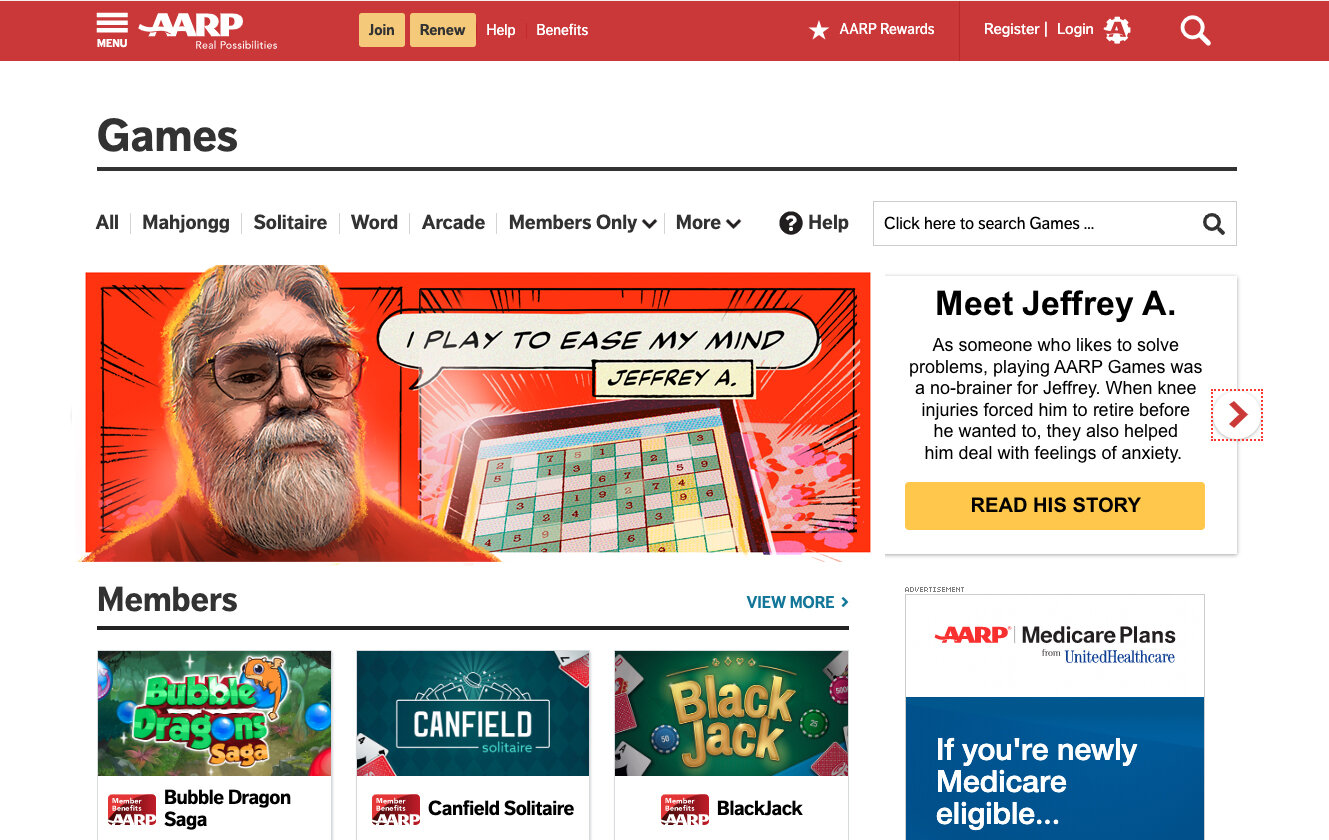
“Games do have a meditative effect. It helps me forget about things that might have gone wrong that day. Maybe it’s sad—there’s got to be more to life than games, right?—but it’s painful to walk. After I put away my Sudoku, I feel happy. Content. Fulfilled, I think.” - Jeffrey A.
“Work hard, play hard. There’s always something that needs to be done. Someone who says, “I’m bored”—no, you’re not bored. You’re lazy! There’s something you need to do, I guarantee it. I like to get stuff knocked out, and then if it looks like I’m doing pretty good and everything’s going my way, I’ll get in there, play a couple of games, then see what else I need to get done.” - Bob J.
“I want to communicate with people who feel that they have a deficit of some sort. It can be depression, it can be the loss of a loved one—it doesn’t have to be a physical thing like what happened to me. But whatever it is, there are ways to pull yourself out of it. One small step at a time is going to get you there. You’ve got to go, “Hey, I could do that one little bit—maybe I could do the next too.” Build yourself up so that you’ve got confidence in yourself again. You can find your own path. You just have to be willing to do it.” - Regan C.

Their stories informed everything we made.

And when it all came together…
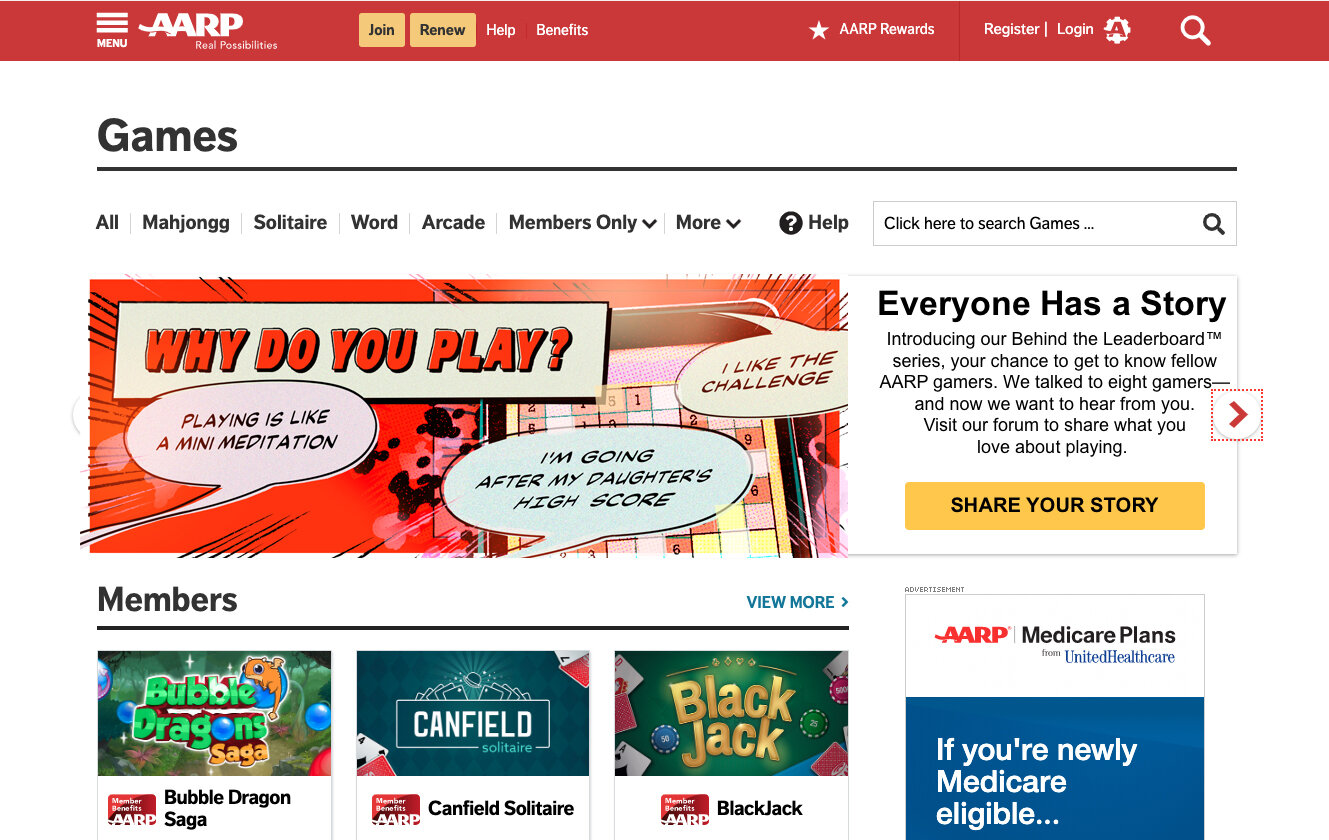
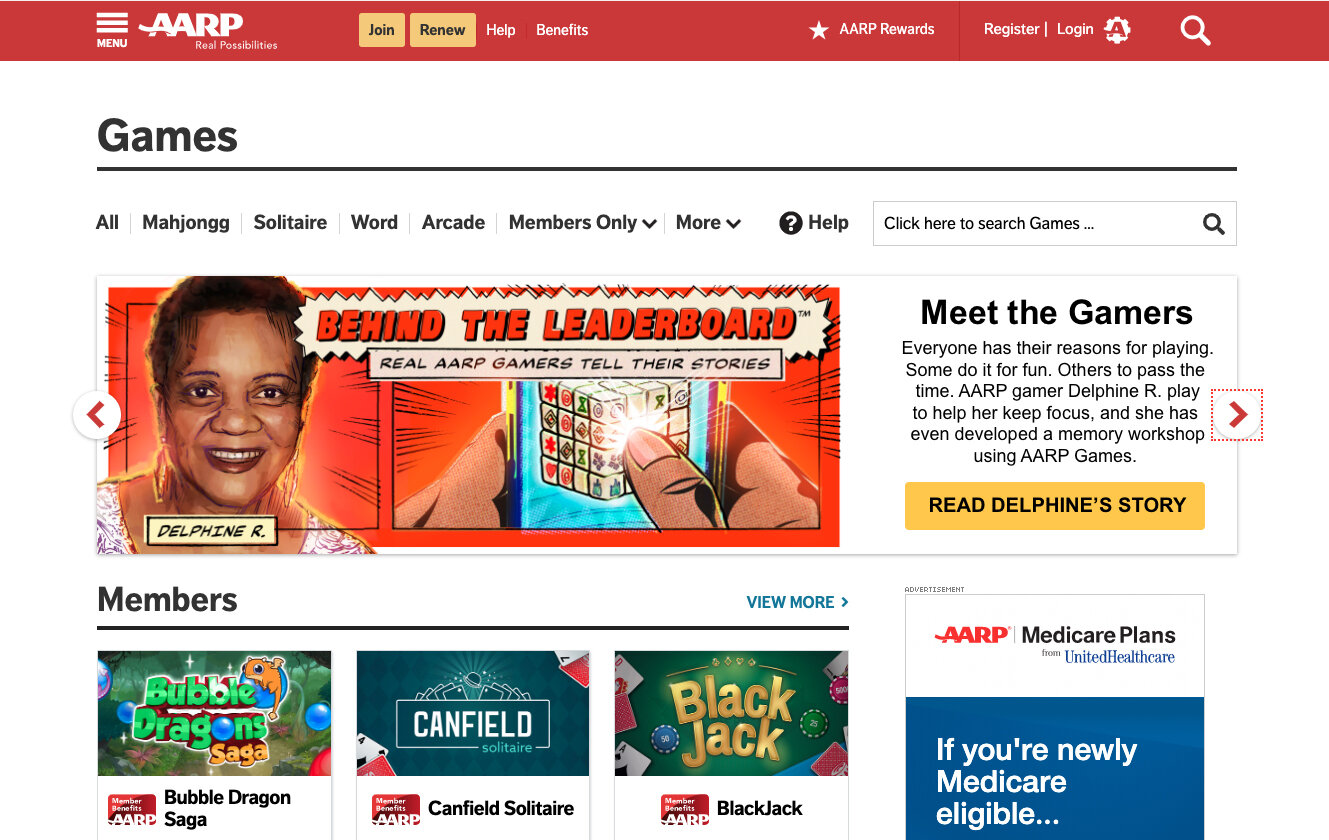
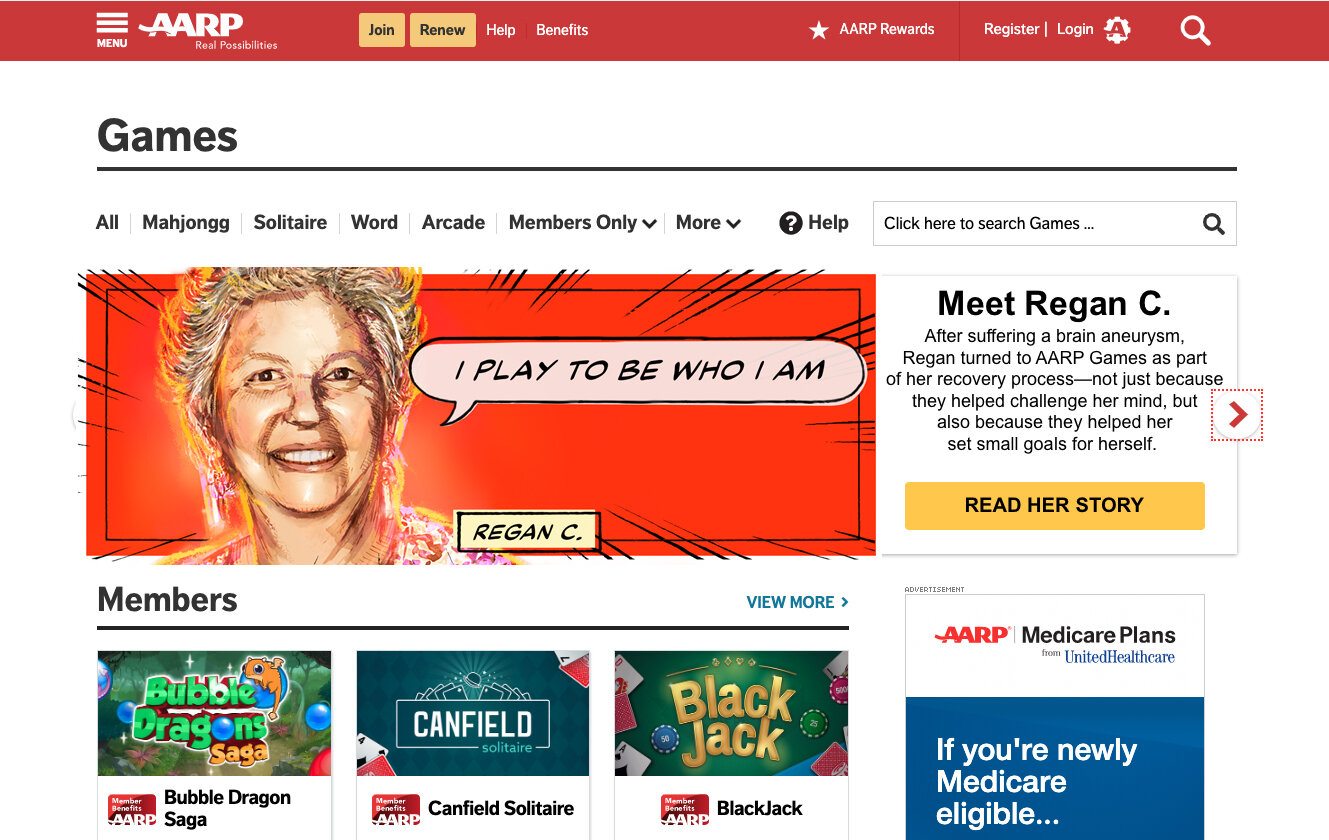
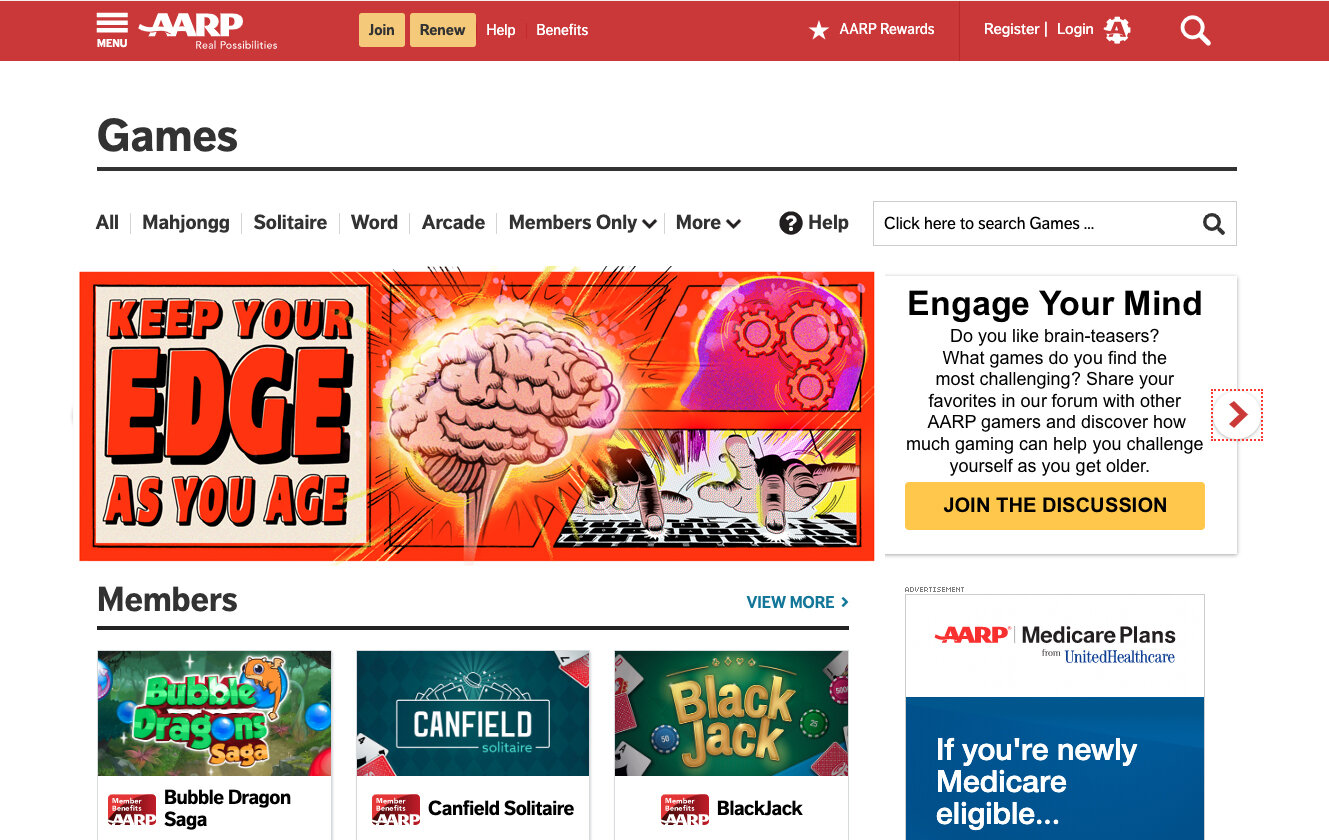
We had built an intricately interconnected suite of social and digital assets, including digital banners, native, placements across AARP.org, and a Facebook Carousel and Instant Experience. Targeting helped us reach the right audience with our featured gamers’ stories, and retargeting drove traffic to the discussion forums so our members could share their own stories.
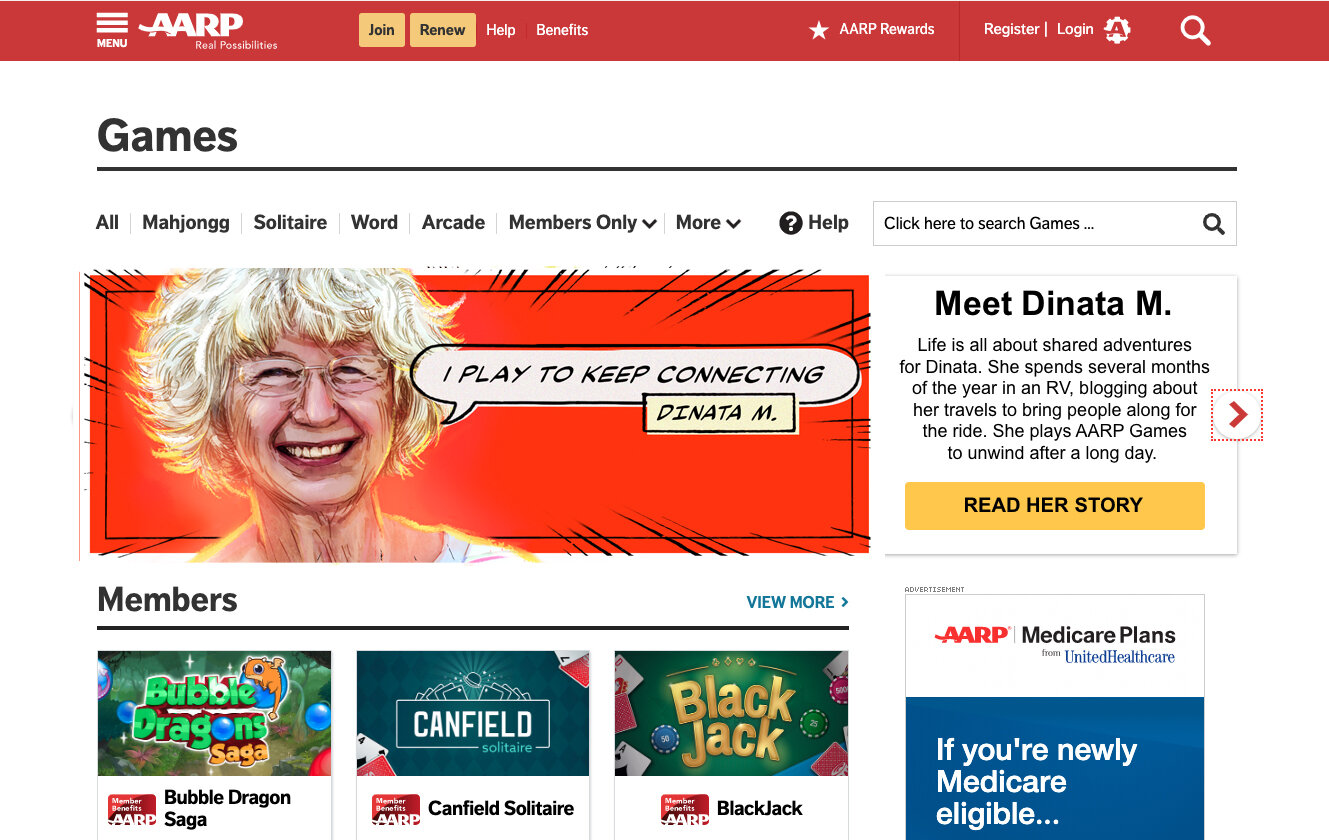
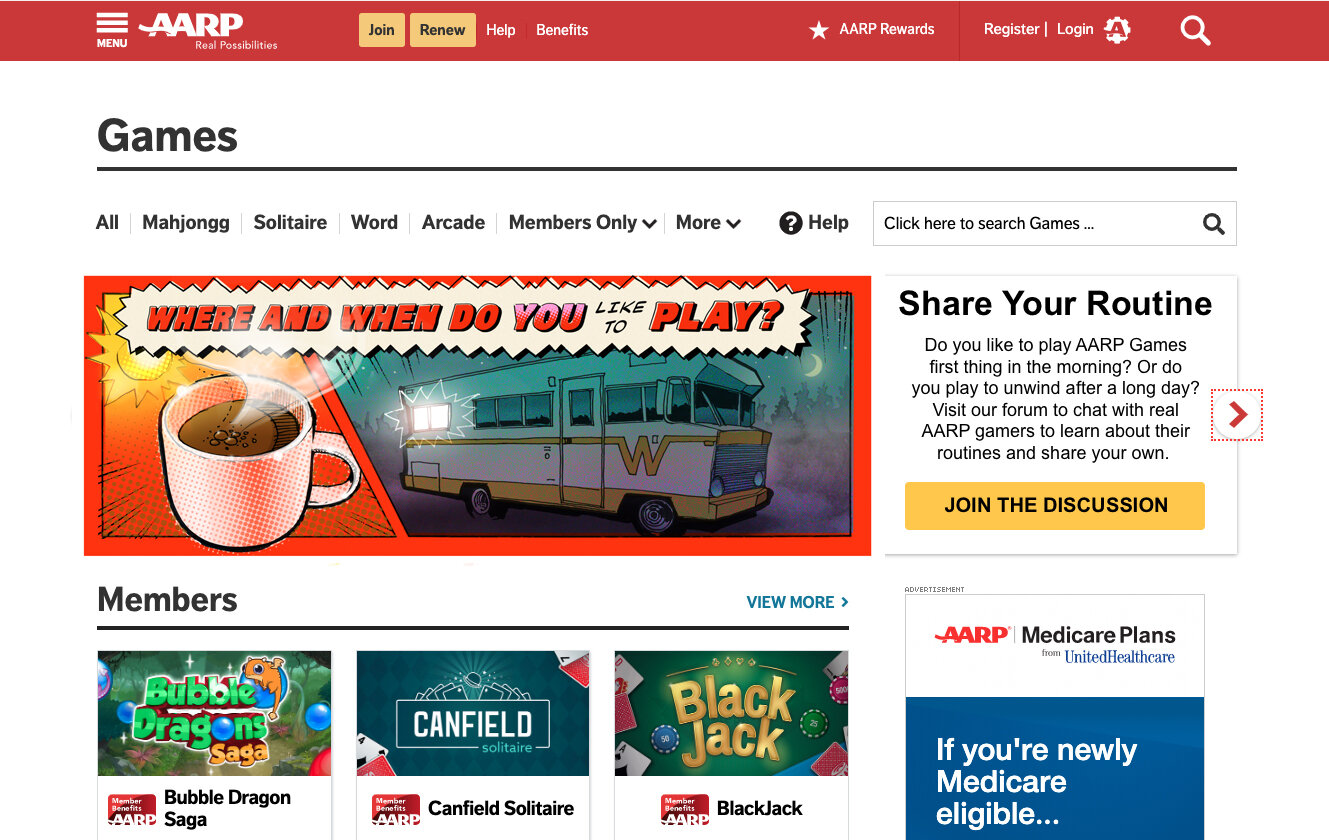
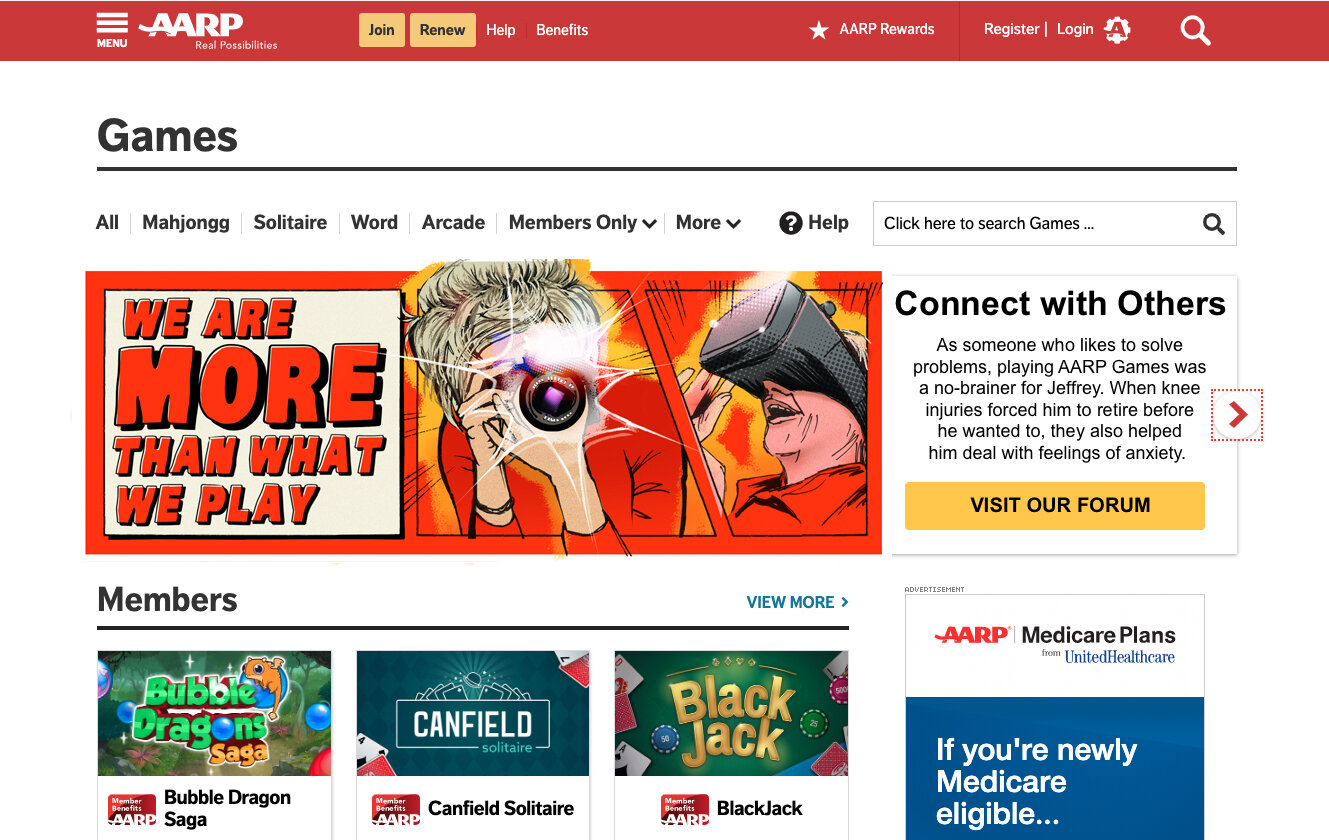
AARP Games homepage carousel sliders, updated weekly.
Facebook Carousel driving to gamer profile articles.

Facebook Instant Experience designed to prompt our audience to think about why they play, and join the moderated conversation in the AARP Games Forum.
The second half of our campaign focused on driving traffic to the AARP Games forum, where we moderated robust weekly discussions designed to transform the way AARP gamers communicated with one another. And it worked. Arguments about high scores and complaints about glitches gave way to conversations about why our gamers play, and what connects them — just as it was designed to do.